
Urinary incontinence after childbirth is one of the most common things new mothers quietly put up with. A small leak when you sneeze, laugh or lift the car seat can feel mortifying, yet it is a medical symptom with a physical cause, and a lot can be done about it.
We meet women who waited years before mentioning it, usually because someone told them it simply comes with motherhood. This guide covers the causes and types of urinary incontinence after childbirth, what you can do at home, where the Tesla Chair fits, and when to see a specialist.
The short answer on urinary incontinence after childbirth
Leakage usually comes from a pelvic floor stretched and weakened by pregnancy and delivery. It often improves over the first few months, and correctly done pelvic floor exercises are the first step for most women. If it carries on, see a doctor to rule out infection and other causes. After that, options include the Tesla Chair and, for some women, specialist surgery.
Why urinary incontinence after childbirth happens
The pelvic floor is a sling of muscle and connective tissue across the base of your pelvis. It holds up the bladder and womb, and helps keep the urethra closed under pressure.
Pregnancy loads that sling with growing weight while hormones soften the tissues. A vaginal delivery then stretches the muscles and nerves much further. The support left behind can be weaker and slower to react, so a cough or a jump pushes urine out.
A long pushing stage, a large baby, a forceps or vacuum delivery, several births and extra weight all raise the likelihood. None of this is your fault.
How common is urinary incontinence after childbirth?
Very common, at every age and after every kind of delivery. Patients often tell us they assumed they were the only one, then discovered a close friend had the same problem.
Stress, urge or mixed: types of bladder leakage after birth
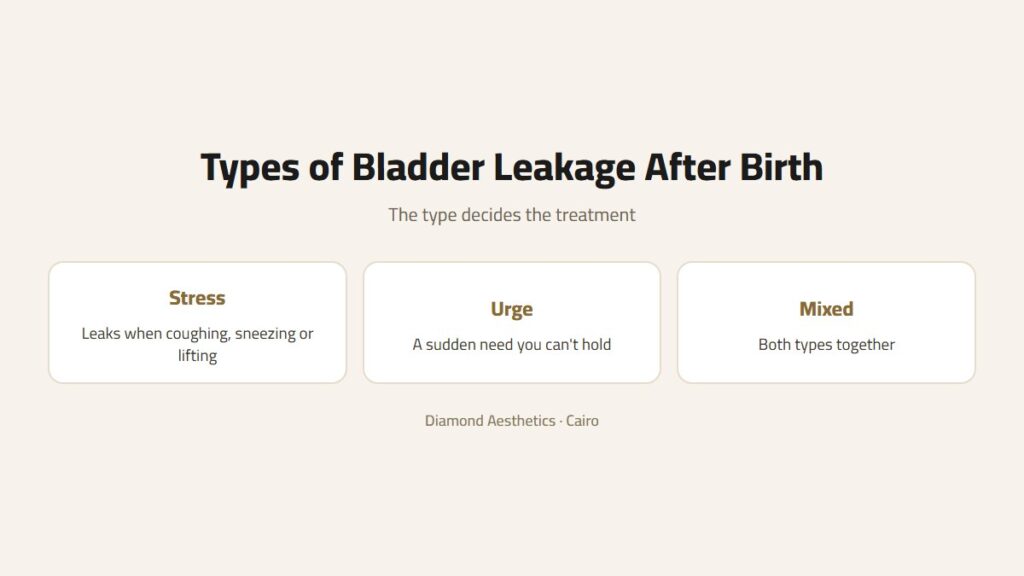
Each type responds to different treatment, so notice your pattern before your appointment.
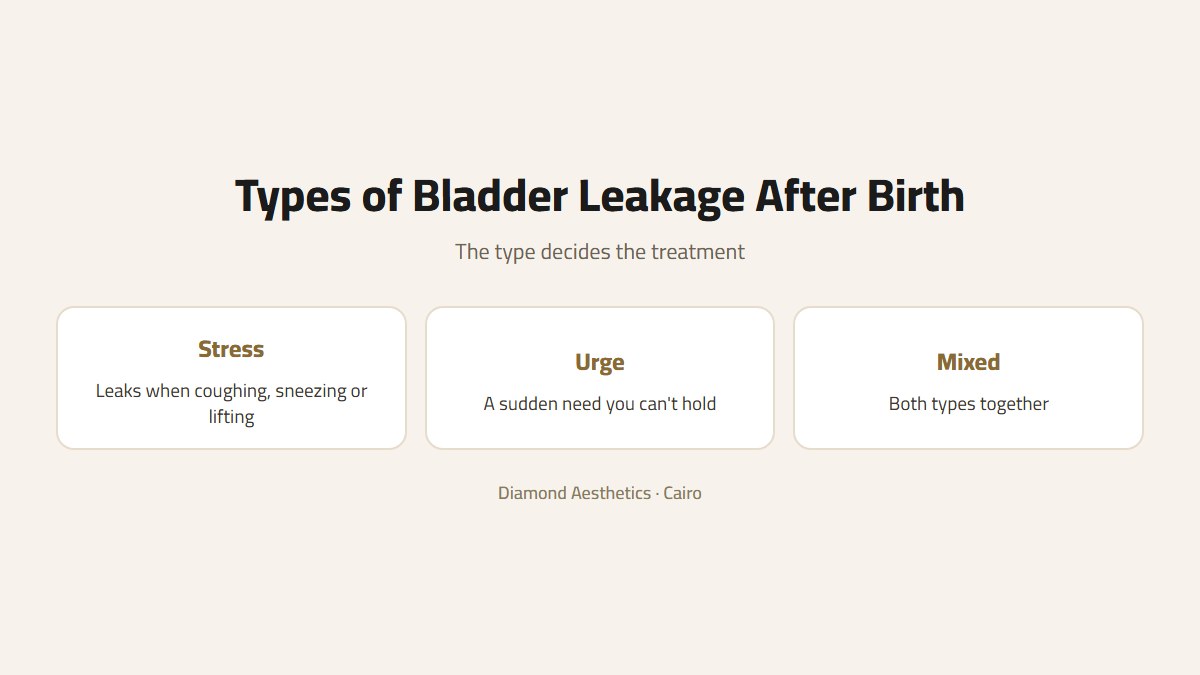
Stress urinary incontinence
This is the classic pattern after delivery. Urine escapes when pressure suddenly rises: coughing, sneezing, running, lifting your baby. It points to weak support around the urethra.
Urge incontinence
Here the bladder muscle squeezes before you are ready. You feel a sudden, strong need to go and may not reach the bathroom in time. The sound of running water can be enough.
Mixed incontinence
Many women have both, and we look first at whichever bothers you more.
Natural birth or Caesarean: urinary incontinence after childbirth can follow both
A vaginal delivery puts more direct strain on the pelvic floor, so leakage is generally more likely after a natural birth. Women who delivered by Caesarean still come to us with it, because pregnancy had already loaded those muscles.
The approach is largely the same either way: find the type, rule out other causes, then rebuild. After a Caesarean, your doctor will also want the wound healed first.
When it improves on its own, and when it does not
A little leakage in the early weeks is very common while tissues heal. For many women control returns gradually over the first few months, especially with regular exercises.
We suggest an assessment if leakage is still there around three months after delivery, is getting worse, or has you skipping exercise or outings. Urinary incontinence after childbirth that has lasted a year or more is unlikely to settle by waiting alone.
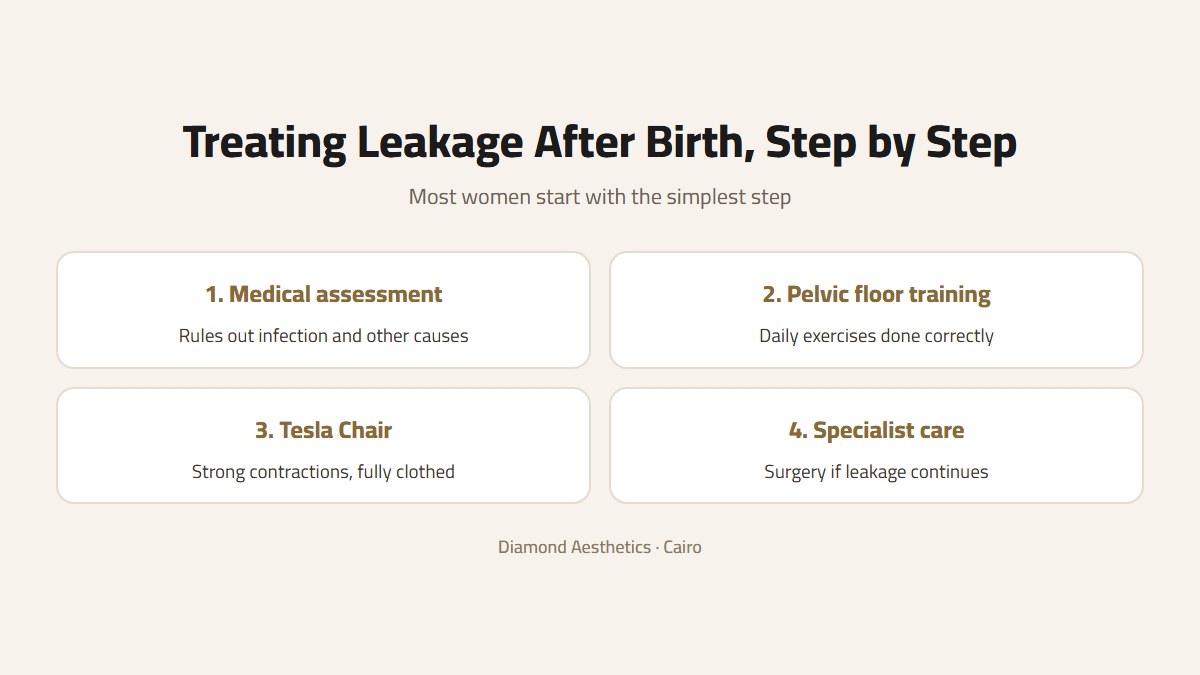
See a doctor first: ruling out infection and other causes
Before any stress incontinence treatment, someone needs to confirm that this is really what you have. A urine infection can cause urgency and leakage, and it needs its own treatment. Constipation, a prolapse or incomplete bladder emptying can look similar.
An assessment usually means questions about your births and symptoms, a urine test and an examination. You may be asked to keep a short bladder diary.
For an independent overview before you come, the ACOG patient guide to urinary incontinence is clear and well written.

Warning signs with urinary incontinence after childbirth
Please seek prompt review if you notice any of these alongside leakage:
- Burning or pain when you pass urine
- Blood in your urine
- Fever or shivering, or pain in your back or side
- Being unable to pass urine, or a full bladder you cannot empty
- A bulge in the vagina, or a heavy dragging feeling
- Leakage that never stops, day or night, with no dry spells
Pelvic floor exercises for urinary incontinence after childbirth
Pelvic floor exercises are the first-line treatment for stress leakage, and they help urge symptoms too. The catch is that many women do them slightly wrong and decide they do not work.
- Sit or lie comfortably, with your thighs, tummy and bottom relaxed.
- Squeeze and lift inside, as if holding in wind and stopping urine at the same time.
- Hold for a few seconds, breathing normally, then let go fully and rest.
- Repeat several times, a few times a day, every day.
Watch for the usual mistakes: holding your breath, clenching your buttocks, or bearing down instead of lifting. Give it around three months of steady practice before judging the result. If you cannot feel anything happening, ask a doctor or pelvic health physiotherapist to check you are using the right muscles. After a tear or stitches, ask your doctor when to begin.
Can a machine replace this work? We look at that question for the rest of the body in EMS sessions versus gym training. For the pelvic floor, we still want you exercising.
Bladder habits, weight and fluids
Small daily changes also help with urinary incontinence after childbirth.
- Go at regular intervals. Going just in case teaches the bladder to hold less.
- If urgency is the problem, delay by a few minutes and slowly stretch the gap.
- Keep drinking normally. Cutting fluids makes urine stronger, which can irritate the bladder.
- Try cutting back on coffee, strong tea and fizzy drinks for a while.
- Treat constipation, since straining loads the pelvic floor.
Extra weight adds steady pressure, so gradual weight loss can ease stress leakage. If loose skin or separated muscles bother you once your weight has settled, tummy tuck surgery after pregnancy addresses that area, though it has no effect on bladder control.
The Tesla Chair for urinary incontinence after childbirth
The Tesla Chair is one of the options in our feminine aesthetics service. High-intensity electromagnetic stimulation triggers strong, repeated pelvic floor contractions. We usually consider it for mild stress leakage, for recovery after delivery, and for women who find the exercises hard.
You stay fully clothed, which is a great relief to many women. You simply sit on the chair, then return to your day. A course is several sessions spread over a few weeks, and your doctor sets the number after assessing you.
It works on the same principle as our M-Shape electromagnetic muscle stimulation, used elsewhere on the body. Please tell us about any pregnancy, pacemaker or metal implant, so the doctor can decide if it is safe for you.
What the Tesla Chair cannot promise
The Tesla Chair is no guaranteed cure for urinary incontinence after childbirth. Many patients notice better control as the course goes on, some notice less, and the evidence is still developing. It will not correct a prolapse, and it may be the wrong first step if urgency is your main problem.
As with EMS body sculpting results, any improvement builds gradually and has to be maintained, so your exercises continue after the last session.
For a wider view, read whether non-surgical treatments really work.
Patients also ask about PRP. It is one of our regenerative aesthetic treatments, used for dryness and tissue quality, and we would not present it as a leakage treatment.
Stress incontinence treatment beyond our clinic: urologist, urogynaecologist and surgery
Some urinary incontinence after childbirth needs more than we can offer. If symptoms persist after good conservative care, or there is a prolapse, repeated infections or an unclear picture, the right person is a urologist or urogynaecologist. We discuss this openly and guide you to the right specialist.
Medication can help urge symptoms. For stress leakage, options include a mid-urethral sling or bulking injections around the urethra, each with its own risks. Many specialists prefer to wait until you have finished having children.

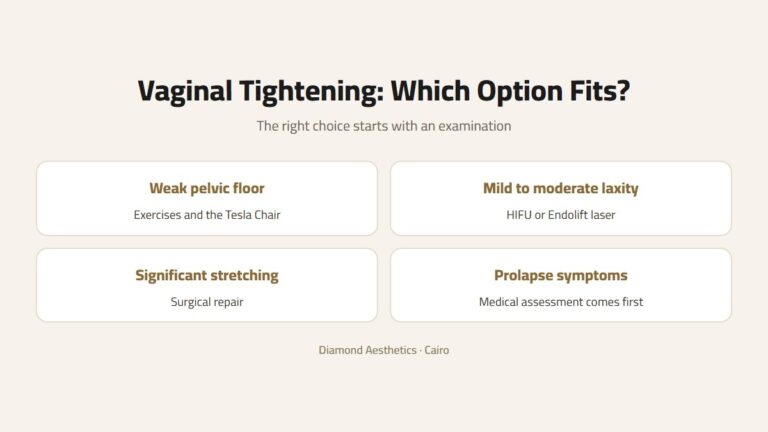
Tightening procedures address a feeling of looseness and do not treat urinary incontinence after childbirth, as we explain in our guide to vaginal tightening after childbirth.
If you are weighing up any operation in Cairo, our article asking is plastic surgery in Egypt safe covers the general safety questions.
Urinary incontinence after childbirth in short: it is common, it has a physical cause, and it can follow a natural birth or a Caesarean. Start with a medical check, then learn the exercises properly. The Tesla Chair may help mild stress leakage, and persistent symptoms belong with a specialist.
FAQ
Questions women ask us about bladder leakage after birth
Does urinary incontinence after childbirth go away on its own?
For many women it improves gradually over the first few months, especially with regular pelvic floor exercises. If it is still there around three months after delivery, or it is getting worse, it is worth having it assessed.
What is the best stress incontinence treatment after having a baby?
Pelvic floor exercises done correctly are the usual first step, after a medical check has ruled out infection and other causes. If they are not enough, a doctor may discuss the Tesla Chair for mild leakage or refer you to a specialist.
How long do pelvic floor exercises take to work?
Most women need around three months of steady daily practice before judging the result. Some notice changes sooner, and it is worth continuing once you improve.
Can I get bladder leakage after birth if I had a Caesarean?
Yes. Pregnancy itself loads the pelvic floor, so leakage can follow a Caesarean as well as a natural birth. The assessment and first steps are largely the same.
Does the Tesla Chair cure stress urinary incontinence?
It is not a guaranteed cure, and the evidence is still developing. Many patients notice better control during a course, and the doctor decides if it suits you and how many sessions you need.
Will I need surgery for urinary incontinence after childbirth?
Most women start with simpler steps and many never need surgery. If leakage continues, a urologist or urogynaecologist can discuss surgical options. We can talk it through with you and guide you to the right specialist.
Talking to us about urinary incontinence after childbirth
You do not need the perfect words. Tell us you leak when you cough, and we take it from there, privately. To see what we offer women, visit our feminine aesthetics page.
When you are ready, book a private consultation in Cairo and we will help you find the right next step.