


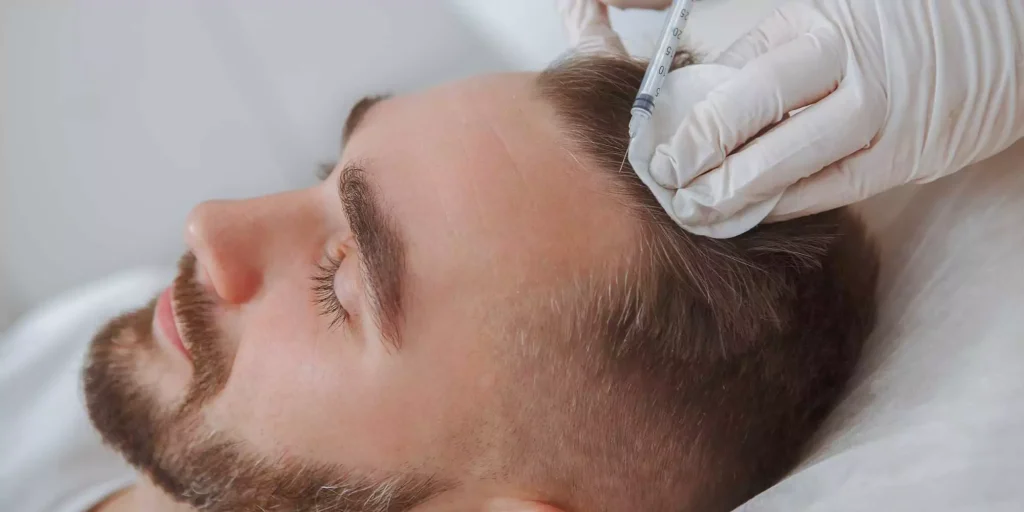
Diamond Aesthetics offers hair transplant in Egypt and non-surgical hair restoration under one roof in El Nozha, Cairo. Whether you are dealing with a receding hairline, a thinning crown, a patchy beard or sparse eyebrows, we plan your treatment around your hair, your face and your goals, under the supervision of Dr. Sherif Hegazy.
Not every case needs surgery. Some patients are best served by an FUE hair transplant, others by scalp treatments such as PRP or mesotherapy that support the hair they already have, and many do best with a combination. The right choice is made after a face-to-face assessment, and we welcome patients from across Egypt and the Gulf who travel to Cairo for treatment.
Hair Transplant in Egypt: FUE & FUT Techniques
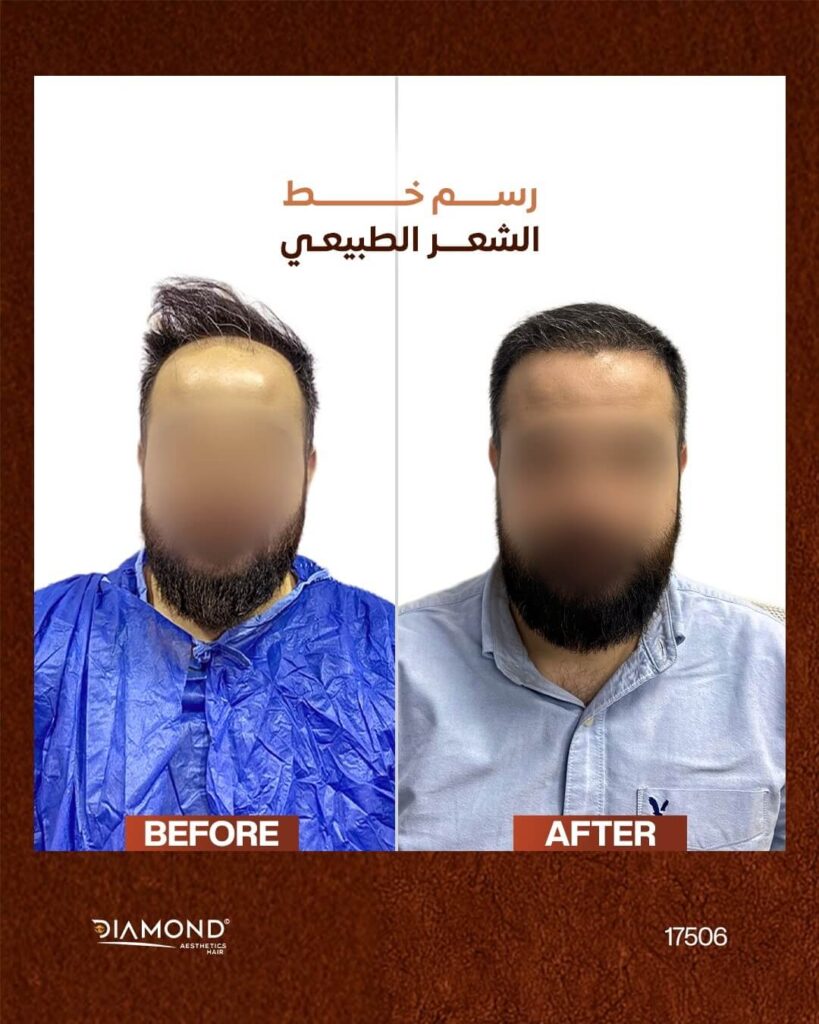
A hair transplant moves healthy follicles from a donor area, usually the back and sides of the scalp where hair tends to resist pattern loss, to thinning or bald areas. Because transplanted follicles keep their original characteristics, what grows back is your own hair, growing naturally.
FUE or FUT: which technique suits you?
With FUE (Follicular Unit Extraction), follicles are taken one by one with a fine punch, leaving tiny dot scars that are usually easy to hide even with short hair. FUT, the strip method, removes a thin strip of scalp that is then divided into grafts; it leaves a fine linear scar but can suit some patients who need a larger number of grafts. Your doctor will explain which approach fits your donor area and pattern of loss. For a comparison with newer implantation methods, see our guide to FUE vs DHI hair transplant.
How the procedure is done
- Hairline design and marking, agreed with you before anything starts.
- Local anaesthesia of the donor and recipient areas.
- Graft extraction, then careful placement at a natural angle and direction.
- Dressing and clear aftercare instructions; most patients go home the same day.
Recovery and results
Mild swelling, redness and small scabs are common in the first one to two weeks, and most people return to desk work within a few days to a week. The transplanted hairs typically shed in the first weeks, which is expected, and new growth usually starts after around three to four months, with the fuller result developing over about a year. Our week-by-week hair transplant recovery guide explains each stage, and our article on hair transplant side effects covers what is normal and when to contact us.
Beard & Mustache Transplant in Egypt
A beard transplant takes follicles, usually by FUE, from the scalp donor area and places them in the beard or mustache. It can fill patchy areas, thicken a light beard, sharpen the cheek line and neckline, or cover scars where hair no longer grows.
It may suit men whose facial hair is sparse because of genetics, or whose beard has gaps that growing it longer does not hide. Before the procedure we design the shape with you, including density, cheek line and neckline, so the result looks like it belongs to your face.
What to expect after a beard transplant
The procedure is done under local anaesthesia, and grafts are placed one by one following the natural direction of facial hair. Small crusts around the grafts usually settle within seven to ten days. As with the scalp, transplanted hairs often shed early and regrow gradually over the following months. Most patients can start trimming or shaving again once the doctor confirms the area has healed.
Eyebrow Transplant
An eyebrow transplant restores thin or missing brows using single, fine hairs selected from the donor area. It is used for brows thinned by years of over-plucking, genetics, scars or ageing, in both women and men.
Brow hair grows at a very flat angle and changes direction along the brow, so placement is precise, delicate work. We start by drawing the shape with you, taking your facial proportions and preferences into account, then place the grafts under local anaesthesia.
Mild swelling and small crusts are common for several days. Transplanted brow hairs usually shed and then regrow over a few months. Because they come from the scalp, they keep growing longer than natural brow hair, so regular trimming is part of living with the result. Brow loss caused by an active medical condition needs to be assessed first and, in some cases, treated before a transplant is considered.
Stem Cell Therapy for Hair
Stem cell–based hair treatments are a newer, non-surgical option aimed at supporting weak follicles in thinning areas. The idea is to deliver regenerative factors to the scalp to improve the environment around the follicle, particularly in early or moderate thinning.
This is an evolving field and results vary from person to person. The treatment does not create new follicles where the scalp is already completely bald, so it is usually considered for thinning hair rather than advanced baldness, sometimes alongside a transplant or other scalp treatments.
During your consultation, the doctor will explain exactly what the treatment involves, how many sessions are planned and what a realistic result looks like for you. For an honest look at the evidence, read stem cell hair treatment: hype or real science.
PRP Hair Treatment (Platelet-Rich Plasma)
PRP hair treatment uses a small sample of your own blood, processed to concentrate the platelets, which carry natural growth factors. The plasma is then injected into the thinning areas of the scalp.
Who PRP suits
PRP is often used for early pattern hair loss in men and women, for increased shedding, and to support growth after a transplant. It works on existing follicles, so it does not replace a transplant where the hair is already gone.
Sessions and results
A course usually involves several sessions spaced a few weeks apart, followed by maintenance sessions as your doctor advises. Each session is short, with numbing available for comfort; mild tenderness or redness of the scalp for a day or so is common. Any improvement in shedding and thickness is gradual and appears over months. Read more about PRP after a hair transplant and how it may support your results.
Mesotherapy for Hair Growth
Hair mesotherapy delivers a blend of vitamins, amino acids, peptides and other nutrients into the scalp through very fine micro-injections. The aim is to nourish weak hair, reduce breakage and support the hair cycle in people with thinning or diffuse shedding.
It can suit both men and women, especially when shedding is linked to stress, diet, hormonal changes or recovery from illness, once the cause has been checked. Treatment is usually given as a series of sessions and can be combined with PRP or used to maintain results after a transplant.
Sessions are quick and you can usually return to normal activities straight away; mild redness or tenderness tends to fade within a day. Not sure which scalp treatment fits you? Our comparison of PRP vs mesotherapy for hair loss explains the differences.
Who Is a Good Candidate for Hair Restoration?
- Men with pattern hair loss and a stable, healthy donor area.
- Women with thinning in defined areas or a widening part, after the cause has been assessed. Our guide to hair transplants for women explains the options.
- People with a patchy beard, a sparse mustache or thin eyebrows.
- Those in the early stages of thinning who prefer non-surgical options such as PRP, mesotherapy or stem cell therapy.
- Patients in good general health with realistic expectations about density and timing.
Some conditions, such as certain types of active hair loss, scalp disease or uncontrolled medical problems, may need treatment first or may make a procedure unsuitable. Every procedure also carries possible side effects, which your doctor will discuss with you before recommending anything.
Your Journey at Diamond Aesthetics
- Consultation and assessment: an examination of your scalp and donor area, a review of your medical history and pattern of loss, and an honest discussion of what you want to achieve.
- Personalised plan: we recommend a transplant, a non-surgical treatment or a combination, and explain the technique, the expected timeline and possible side effects.
- Procedure: carried out in the clinic, under local anaesthesia for transplants, with the hairline, beard or brow design agreed with you beforehand.
- Aftercare and follow-up: written aftercare instructions, check-ups as your hair grows, and maintenance treatments where helpful. Patients outside Cairo can stay in touch with us on WhatsApp.
Why Choose Diamond Aesthetics for Hair Transplant in Cairo
- Doctor-led care under the supervision of Dr. Sherif Hegazy, from the first assessment to follow-up.
- Surgical and non-surgical options in one place: FUE and FUT hair transplant, beard and eyebrow transplants, stem cell therapy, PRP and mesotherapy.
- Personalised plans built around your hair and face, not a fixed package.
- Natural design, with hairlines and beard lines drawn to suit your features and age.
- Follow-up as your results develop, in person or remotely.
- Convenient for Gulf visitors planning a hair transplant in Egypt, with help organising your visit. Learn more about medical tourism in Egypt.
If you are considering a hair transplant in Egypt, book a consultation by calling or messaging us on WhatsApp at +20 114 947 0043.
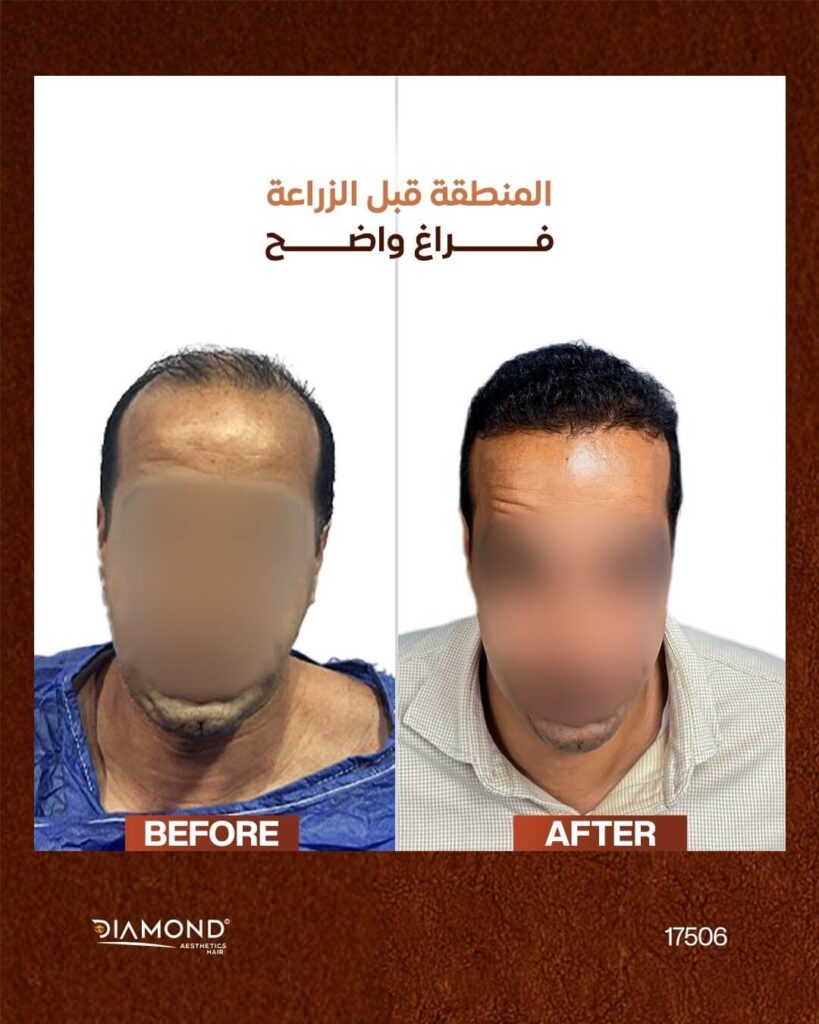
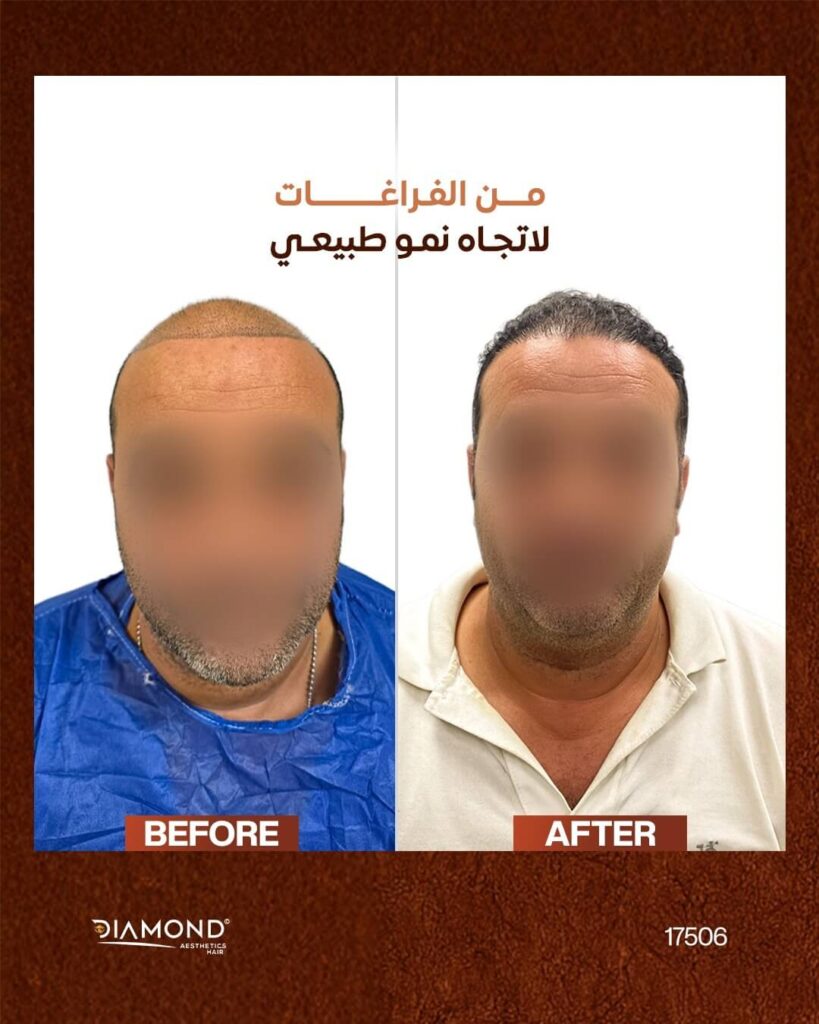
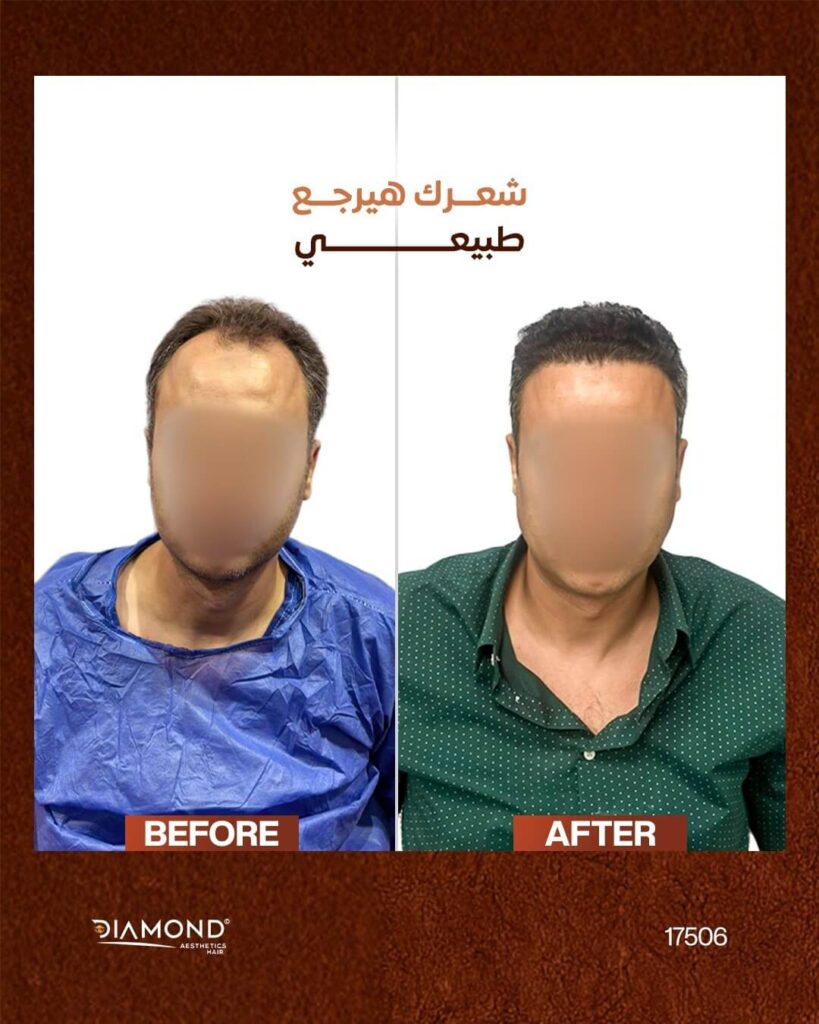
Real results
Frequently asked questions about hair transplant in Egypt
How much does a hair transplant in Egypt cost at Diamond Aesthetics?
The cost depends on your individual plan: the technique, the area to be treated, the number of grafts needed and whether supportive treatments such as PRP are included. Because every case is different, the cost is set after your consultation and assessment. You can call or WhatsApp us on +20 114 947 0043 to book.
Which is better for me, FUE or FUT?
Both techniques move your own follicles from the donor area to thinning areas. FUE leaves tiny dot scars and usually allows a quicker recovery, while FUT leaves a fine linear scar but can suit some patients who need more grafts. Your doctor will recommend the technique after examining your donor area and pattern of hair loss.
How long does a hair transplant take, and when will I see results?
The procedure is usually done in one day under local anaesthesia, and most patients go home the same day. Transplanted hairs typically shed in the first weeks, new growth usually begins after around three to four months, and the fuller result develops over about a year. Timelines vary from person to person.
Is a hair transplant painful?
The procedure is done under local anaesthesia, so most patients feel pressure and movement rather than sharp pain once the area is numb. Some soreness, tightness or swelling afterwards is common and is usually managed with the medication your doctor prescribes. Your doctor will explain what to expect before the day.
Can women have a hair transplant?
Yes, some women are good candidates, particularly those with thinning in defined areas and a healthy donor area. Female hair loss often has hormonal, nutritional or medical causes, so these are assessed first. In many cases, non-surgical treatments such as PRP or mesotherapy are considered before or alongside a transplant.
Does PRP work for hair loss?
PRP may help reduce shedding and improve thickness in some patients, especially in early pattern hair loss and after a transplant. Results vary and appear gradually over a course of sessions. It works on existing follicles, so it cannot regrow hair in areas that are completely bald.
Are beard transplant results permanent?
Beard grafts are taken from the scalp donor area, where hair tends to resist pattern loss, so for most patients the transplanted hair continues to grow long term. The transplanted hairs often shed in the first weeks and regrow over the following months. Your doctor will discuss realistic density and timing for your case.
I live in the Gulf. How do I plan a hair transplant in Cairo?
You can start by sending us your questions and photos of your hair on WhatsApp so we can advise on next steps. The in-person consultation and assessment come first, then the procedure is scheduled according to your plan. Our team will explain the aftercare and how follow-up continues once you are back home.