
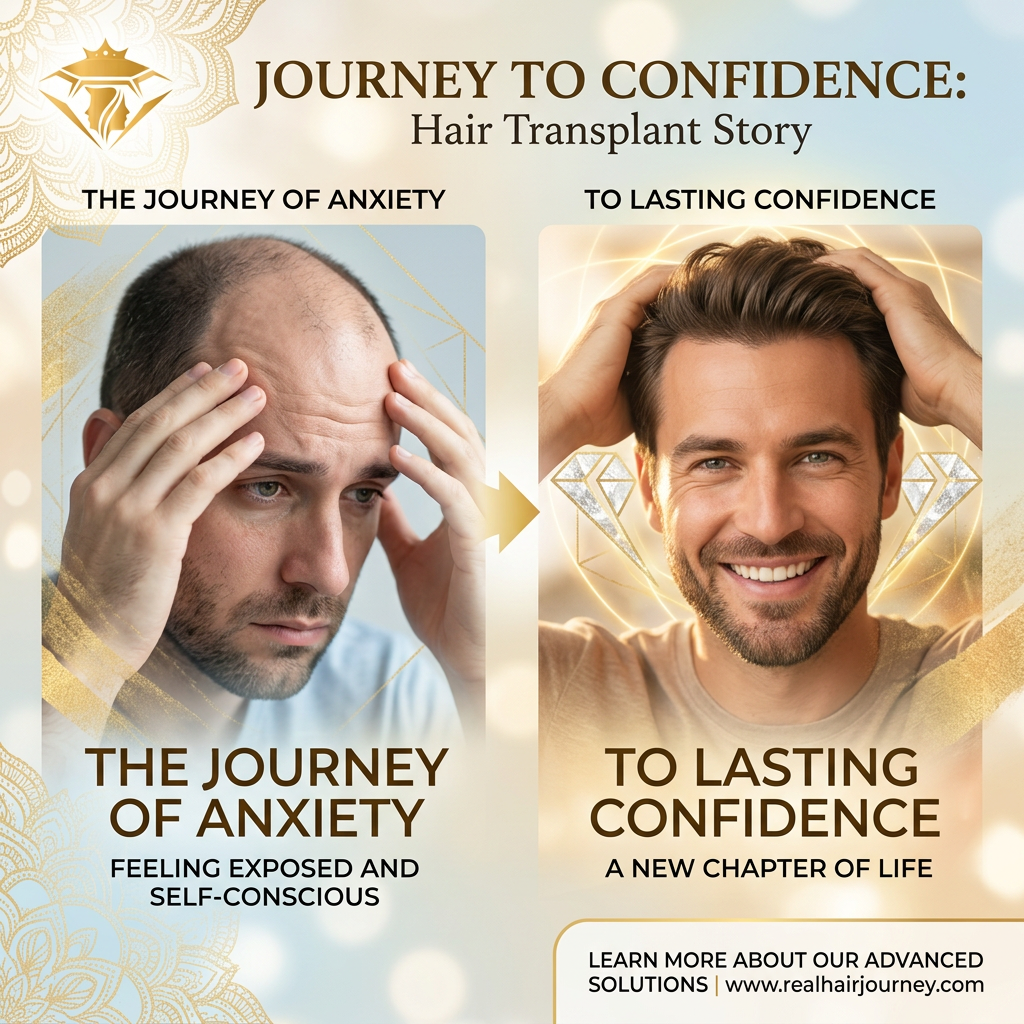
From Self-Conscious to Self-Assured: A Real Hair Transplant Journey
The first thing to understand about a hair transplant journey is that it doesn’t begin in an operating room. It begins much earlier — usually in a quiet, private moment in front of a mirror, or a bathroom selfie taken at an unflattering angle that confirms a suspicion. For one patient we’ll call Karim (a composite of many real Diamond Aesthetics patients, anonymized), it began with a wedding photo. Not his own. A friend’s, where he was in the background, and the camera flash caught the thinning at his crown in a way no mirror ever had.
What follows is the arc that hair restoration patients actually live through — the hesitation, the research spiral, the decision, the surgery, the strange quiet months, and the slow return of something that turns out to be bigger than hair. Dr. Sherif Hegazy, founder of Diamond Aesthetics in Cairo and an ISHRS member with over 10,000 procedures, has watched thousands of patients walk this path. The medical details vary. The emotional journey is remarkably consistent.
Direct Answer
A hair transplant journey typically unfolds in stages: noticing and worrying about hair loss, researching options, consultation and decision, the procedure day under local anesthesia, an early recovery with swelling and scabbing, a discouraging shock-loss phase where transplanted hair sheds, a quiet waiting period, and finally regrowth from month three that matures into the full result by 12–18 months. The emotional shift — from self-consciousness to confidence — often outweighs the cosmetic change.
The Hesitation
Karim did what almost everyone does first: nothing. For over a year he managed it. He changed his haircut to disguise the crown. He avoided overhead lighting. He stopped being the one to suggest group photos. Hair loss rarely announces itself as a crisis; it erodes confidence quietly, one small avoidance at a time.
The turning point wasn’t vanity. It was the realization that he was spending mental energy — every single day — on something he’d decided to ignore. The avoidance was costing more than the problem.
The Research Spiral
Anyone who has researched hair transplants knows the rabbit hole. Forums full of horror stories. Before-and-after photos that look too good to be true. Clinics promising the world for suspiciously low prices. Conflicting advice about FUE versus DHI, graft counts, and which country to fly to.
The research phase is where good decisions and bad ones diverge. Karim eventually stopped trying to become an expert and started looking for one. He shifted his questions from “which technique is best?” to “who is the surgeon, what are their credentials, and can I see real results from patients like me?”
The Consultation
The consultation is where the journey gets real. A good one isn’t a sales pitch — it’s a diagnostic conversation. Karim’s included:
- An examination of his donor area to assess what was available to work with
- An honest read on his Norwood stage and how his loss might progress
- A discussion of realistic density, not miracle promises
- A clear technique recommendation with the reasoning behind it
- A frank conversation about expectations and timeline
What reassured him most wasn’t a promise. It was the surgeon’s willingness to temper his expectations — to explain what the result would and wouldn’t be. Honesty, it turns out, is more convincing than enthusiasm.
The Decision
Deciding felt enormous and, simultaneously, like a relief. The fear wasn’t really about the surgery — it was about hope. Committing meant admitting how much it had been bothering him, and risking disappointment. That vulnerability is the quiet hard part of the decision that no clinic brochure mentions.
The Day
The procedure day was, in Karim’s words, anticlimactic in the best way. Local anesthesia. The brief sting of the numbing injections, then nothing. Hours of lying back, listening to music, dozing, chatting with the team. No pain, just the surreal awareness of a long, meticulous process happening on his scalp.
He went home the same day with a slightly swollen forehead, detailed aftercare instructions, and the odd sensation of having finally done the thing he’d circled for over a year.
Early Recovery
The first week brought the expected: swelling that peaked and faded, scabbing that he was warned not to touch, careful washing on a schedule. Manageable, predictable, mildly tedious. He slept propped up, avoided the gym, and watched the recipient area heal.
The Discouraging Part
Then came shock loss. Around week three, the transplanted hairs began falling out — the very hairs he’d waited for. For a patient who hadn’t been warned, this is where panic lives. Karim had been warned, repeatedly, that this was normal and expected: the follicle survives, only the hair sheds, and new growth comes later.
Knowing it intellectually still didn’t fully prepare him for watching it happen. This is the emotional low point of nearly every hair transplant journey — looking, temporarily, like nothing was done at all. The patients who get through it calmly are the ones who understood, going in, that the dip comes before the climb.
The Quiet Months
Months one through three were a test of patience. Nothing visible happening. The temptation to inspect his scalp daily for signs of growth. The advice he kept returning to: stop measuring, trust the timeline, let the follicles do their work beneath the surface.
The Return
Around month four, the first fine hairs appeared. Thin, soft, uneven — easy to dismiss, but unmistakably new growth. By month six, density was building and, for the first time, photographable. The hairs thickened, darkened, and started behaving like the rest of his hair.
By month twelve, the journey had quietly resolved into something ordinary, which was exactly the point. Karim wasn’t thinking about his hair anymore. He’d stopped managing angles and avoiding lights. He suggested the group photo.
The Lesson That Wasn’t About Hair
The cosmetic result was good. But the change patients describe most often isn’t about appearance — it’s about the mental bandwidth they reclaim. The constant background hum of self-consciousness goes quiet. The energy spent hiding gets returned. That’s the part that surprises people: the journey is sold as a hair restoration and experienced as a confidence restoration.
What Makes the Journey Go Well
Pulling the lessons out of the story:
- Choose the surgeon, not the bargain. Credentials and honesty matter more than price.
- Set expectations before you start. Understanding shock loss and the 12-month timeline prevents panic.
- Trust the quiet months. The lack of visible progress early on is normal.
- Follow aftercare exactly. The unglamorous details protect the result.
- Judge at twelve months. Not before.
Common Misconceptions
“You’ll see your new look within weeks.”
The real result is a 12-month story. Early months are deliberately uneventful.
“If the hair sheds, it failed.”
Shock loss is a normal stage. The follicles survive and regrow.
“It’s purely cosmetic.”
The most reported benefit is psychological — reclaimed confidence and mental energy.
“The hardest part is the surgery.”
For most patients the surgery is easy. The waiting and the shock-loss phase are harder emotionally.
“Any clinic gives the same journey.”
The surgeon and aftercare shape the entire experience and outcome.
Frequently Asked Questions
What are the stages of a hair transplant journey?
Noticing hair loss, researching options, consultation and decision, the procedure day, early recovery, shock loss, a quiet waiting period, and regrowth that matures by 12–18 months.
What is the hardest part of the journey emotionally?
For most patients, the shock-loss phase at weeks 2–4, when transplanted hairs shed, followed by the quiet months before regrowth begins.
When will I actually see results?
First new growth appears at 3–4 months, 50–70% density by 6–9 months, and the final result at 12–18 months.
Is the procedure day painful?
No. It’s done under local anesthesia. The brief numbing injections are the only discomfort; the procedure itself is painless.
Why does the transplanted hair fall out first?
Shock loss is normal. The follicle survives the move but sheds its hair shaft before producing new growth from month 3–4.
How do I choose the right surgeon for my journey?
Prioritize verifiable credentials (ISHRS/ASPS), a real portfolio of cases like yours, and an honest consultation over the lowest price.
Is the result worth the wait?
Most patients say yes — and that the confidence restored often matters more than the cosmetic change itself.
How do I stay patient during the quiet months?
Understand that the lack of visible progress is normal, avoid daily scalp inspections, and trust the established timeline.
Does everyone go through shock loss?
Most patients experience some degree of it. It’s an expected stage, not a sign of failure.
What changes most after a successful transplant?
Patients most often report a psychological shift — reduced self-consciousness and reclaimed mental energy — alongside the visible change.
Can the journey be different for women?
The emotional arc is similar; the medical specifics and styling options during recovery may differ.
When should I judge my final result?
At 12 months, with some cases continuing to improve up to 18 months.
Key Takeaways
- The journey starts emotionally, long before surgery
- Good decisions come from choosing the surgeon, not the bargain
- Shock loss and the quiet months are the hardest emotional stretch
- Regrowth begins at month 3–4 and matures by 12–18 months
- The biggest reported benefit is restored confidence, not just hair
- Patience and honest expectations make the journey go well
Expert Summary
Dr. Sherif Hegazy on the patient journey: “I’ve performed thousands of these, and the surgery is the part I think about least when I picture a patient’s experience. What I picture is the year around it. The hesitation before they call. The relief when they finally decide. The wobble at week three when the hair sheds and they need reassurance. And the moment around month eight when they stop mentioning their hair at all — because they’ve stopped thinking about it. That silence is the real result. The hair is just how we get there.”
At Diamond Aesthetics in Cairo, Dr. Hegazy and his team support patients through every stage of the journey — from honest consultation to the full 12-month result — so the experience is guided, expected, and calm from start to finish.