
A thigh lift after weight loss is surgery that removes the loose, hanging skin left on the thighs once the fat has gone, and tightens what remains so the legs have a firmer shape. For many people who have lost a lot of weight, it is the step that finally makes jeans fit, ends the chafing between the legs and lets the mirror catch up with the work they have already done.
Whether a thigh lift after weight loss is worth it comes down to a stable weight, a problem that is mostly skin rather than fat, and being at peace with a permanent scar. Below, our surgical team covers who it suits, the types of lift, recovery and risks. For the procedure basics, see our arm lift and thigh lift treatment page.
The short answer: is a thigh lift after weight loss worth it?
For the right person, yes. If you have kept a stable weight for several months, the inner thighs hang or fold, and exercise or creams have not changed them, a thigh lift after weight loss is usually the only thing that will. The trade-off is a permanent scar and a few weeks of patient recovery.
Why the thighs stay loose after you lose weight
Skin that stays stretched for years loses much of its collagen and elastic fibres, so it cannot spring back. The inner thigh has thin skin, which is why it is often the first place to sag, and why so many people ask us about a thigh lift after weight loss.
None of this means you did anything wrong. It happens to people who lose weight with diet, exercise or bariatric surgery alike. We explain the wider picture in our article on what happens to your body after massive weight loss, which is worth reading if the thighs are only one of several areas bothering you.
Patients often tell us the skin rubs when they walk, gets sore in summer and causes rashes in the groin fold. Those everyday problems matter as much as the look.
Who is a good candidate for a thigh lift after weight loss?
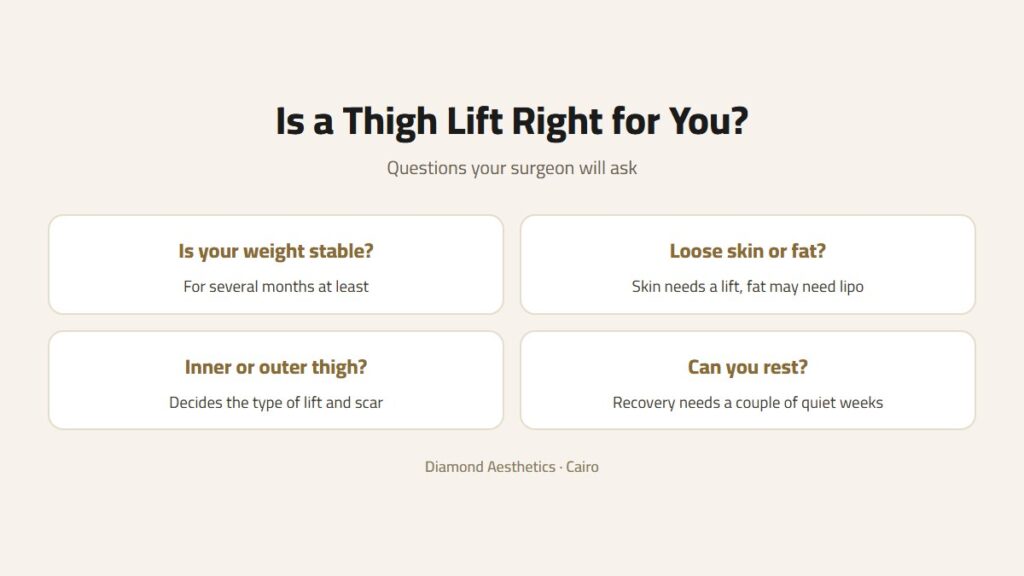
A thigh lift after weight loss works best when the main problem is loose skin, not stubborn fat. If the skin still has some snap, liposuction alone may be enough. If it hangs in a fold and does not bounce back when you let go, removing skin is the answer.
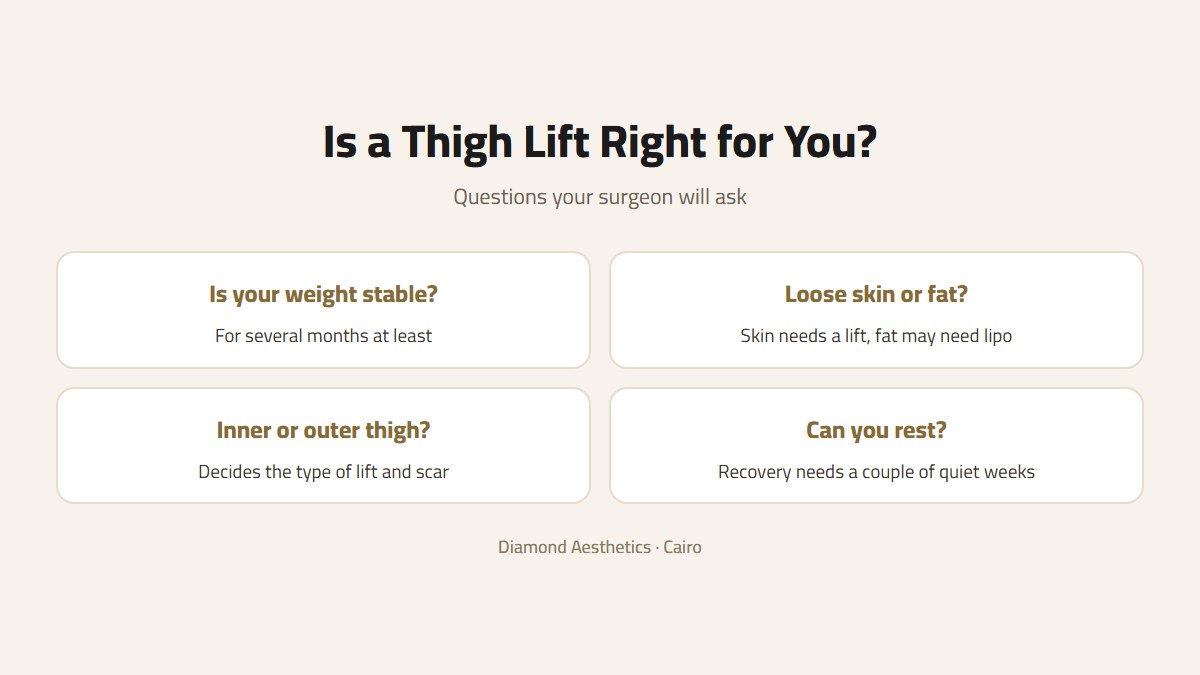
You are usually a good candidate if:
- Your weight has been stable for several months, ideally close to your goal.
- The thighs have hanging or folded skin that does not respond to exercise.
- You are in good general health, with conditions like diabetes well controlled.
- You do not smoke, or you are willing to stop well before and after surgery.
- You accept a visible scar in exchange for a better shape.
It is better to wait if you are still losing weight, planning a pregnancy soon, or hoping for no scar at all. If loose skin affects several areas, our guide to loose skin after weight loss helps you match each one to a treatment.
Inner thigh lift vs outer thigh lift: types and where the scars sit
There is no single thigh lift after weight loss. The technique depends on where the excess skin is, and that choice decides where your thigh lift scars will be.
Medial (inner) thigh lift with a groin scar
For mild looseness in the upper inner thigh, the surgeon removes a crescent of skin near the groin. The scar sits in the crease where the leg meets the body, so underwear usually covers it, but it does little for the lower thigh.
Vertical inner thigh lift
Most people who need an inner thigh lift after weight loss have loose skin along the full length of the inner thigh. The surgeon removes a long strip, and the scar runs down the inside of the leg, sometimes toward the knee. It is more visible, but it is the approach that properly tightens the whole inner thigh.
Outer thigh lift
Looseness on the outer thighs is usually linked to the buttocks and lower back, so it is treated as part of a lower body lift, with a scar around the waist at underwear level. Our body lift treatment page explains how that operation works.
Thigh lift scars are permanent. They start pink and raised, then usually flatten and fade over the following year. Careful placement helps a great deal, but no surgeon can make them invisible up close.
Combining a thigh lift with liposuction or a body lift
If you have leftover fat as well as loose skin, liposuction can be added to a thigh lift after weight loss in the same operation. Liposuction alone cannot remove hanging skin, the same reasoning we explain in our comparison of arm lift versus liposuction for loose skin.
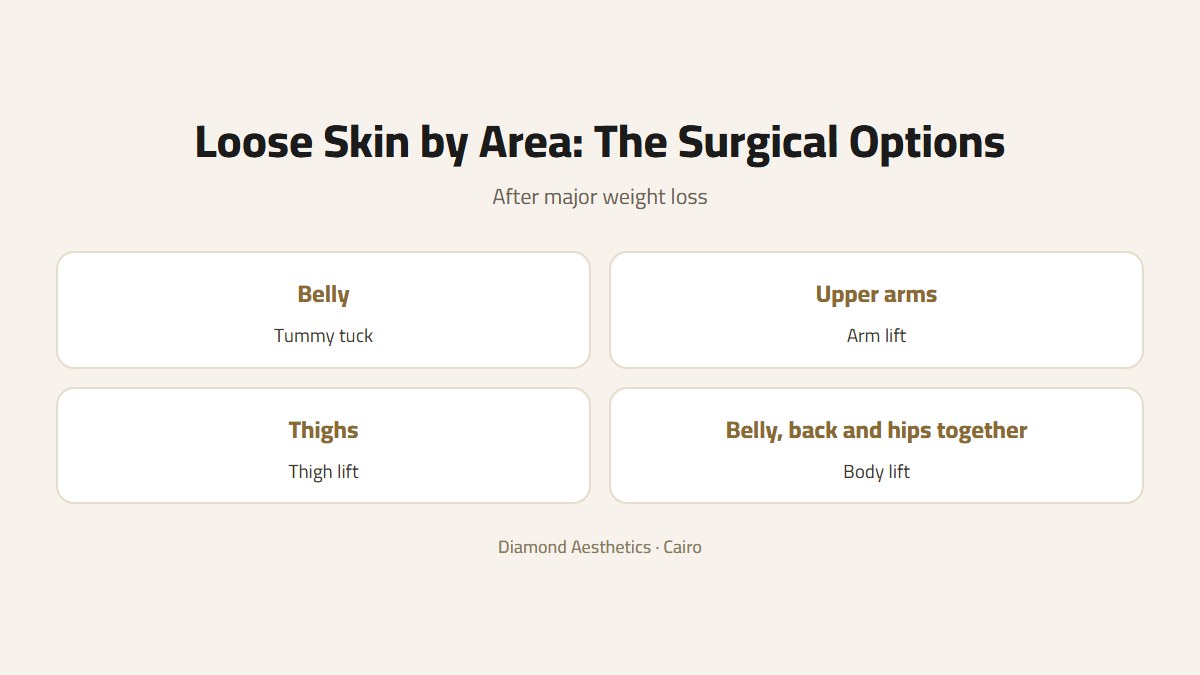
People considering a thigh lift after massive weight loss often have loose skin on the abdomen, back and arms too. Some areas can be combined, others are better staged months apart so each recovery stays manageable. Our article on body lift after weight loss covers the operations most often paired with the thighs.
If you are unsure whether to treat the abdomen alone or the whole lower body, our guide comparing body lift and tummy tuck sets out the differences in scar and recovery.
How thigh lift surgery is done
A thigh lift after weight loss is done under general anaesthesia and usually takes a few hours, longer if combined with other areas. The surgeon marks the skin while you stand, because loose skin hangs differently lying down. The excess is removed, the deeper tissues are anchored so the lift holds, and the wound is closed in layers for a finer scar.
Small drains are sometimes placed for a few days. You wake up in a compression garment and usually stay overnight. This work is part of our surgical body sculpting service, where thigh, arm and body lifts are planned together.

Dr Sherif Hegazy founded Diamond Aesthetics in Cairo and has performed more than 10,000 procedures. He is a member of ASPS, ISHRS and IAAM, and every thigh lift after weight loss at the clinic starts with an in-person assessment of your skin.
Thigh lift recovery time: what the weeks look like
Thigh lift recovery time is what people underestimate most, because the wounds sit where the legs move and rub. The first days are about rest, short walks and keeping the area clean. Pain is usually well controlled with tablets, and the tight feeling eases over the first couple of weeks.
- Compression: you usually wear the garment day and night for several weeks.
- Walking: short, gentle walks start in the first day or two to protect against clots.
- Sitting: allowed but uncomfortable at first; avoid spreading the legs wide.
- Drains: if used, they usually come out within the first week.
- Work: people with desk jobs usually return after about two weeks.
- Exercise: gym work and running usually wait around six weeks.
If you have a wedding or a trip coming up, plan your thigh lift after weight loss well ahead of it. Our thigh lift recovery week by week guide gives the day-to-day detail.
If liposuction is part of your plan, the advice in our post-liposuction recovery guide applies to those areas too.
Risks of a thigh lift after weight loss
Every operation carries risk, and thigh lifts have some specific ones because the groin is warm, moist and always moving. The ones we talk through with every patient are:
- Wound healing problems, especially small openings near the groin where skin is under tension.
- Seroma, a collection of fluid under the skin that may need draining in clinic.
- Scar widening, or the scar slipping slightly downward over time.
- Infection, bleeding, and blood clots in the legs.
- Temporary numbness and lower-leg swelling that settle over months.
Not smoking, steady weight and careful wound care all lower these risks. The American Society of Plastic Surgeons gives a useful overview of body contouring after major weight loss if you want an independent source.
Thigh lift after weight loss: honest pros and cons
The benefits are real. Hanging skin is gone, the thighs look smoother and more in proportion, chafing and rashes usually stop, and clothes fit the body you actually have. Many patients say the biggest change is that they stop hiding their legs.
The downsides: a permanent scar, weeks of limited activity and a small chance of a slow-healing wound. Regaining a lot of weight can stretch the skin again. Cost depends on how many areas are treated and is confirmed only after consultation.
Results: thigh lift before and after
In thigh lift before and after photos, the shape change shows quickly, even under the swelling. The final contour usually settles over several months, and scars keep improving for a year or more.
Results of a thigh lift after weight loss last as long as your weight stays steady, because the removed skin does not come back. Some softening with age is normal.

Thigh lift after weight loss in short: it suits people with stable weight and loose skin rather than fat, it leaves a permanent scar in the groin or along the inner thigh, recovery usually means a couple of weeks off work and about six weeks before exercise, and for the right patient it brings comfort and a shape that matches the effort they put in.
FAQ
Thigh lift after weight loss: common questions
How long should my weight be stable before a thigh lift after weight loss?
We usually like your weight to be steady for several months, close to your goal. Operating while you are still losing weight can leave new loose skin later.
Where are thigh lift scars and do they fade?
They sit in the groin crease, along the inner thigh, or both, depending on the technique. They fade and flatten over about a year but stay visible up close.
What is the usual thigh lift recovery time?
Most people with desk jobs usually return to work after about two weeks. Exercise usually waits around six weeks, and swelling keeps settling for a few months.
Is an inner thigh lift after weight loss different from liposuction?
Yes. Liposuction removes fat but cannot remove hanging skin. An inner thigh lift removes the excess skin, and liposuction is sometimes added in the same operation.
Can I have a thigh lift after massive weight loss together with other surgery?
Often yes, for example with a body lift or arm lift. Some combinations are better staged months apart, which we decide together at consultation.
What do thigh lift before and after results usually show?
A smoother, firmer thigh without hanging folds, plus a visible scar. The final shape usually settles over several months.
Thinking about a thigh lift after weight loss?
You have already done the hardest part by losing the weight. A consultation will tell you which lift fits your body, where the scars would sit and how to plan recovery around work and family.
Read more about our surgical body sculpting options.
When you feel ready, contact our team to book a consultation in Cairo.