Stem Cell Hair Treatments: Hype or Real Science?
“Stem cells regrow hair.” It’s the kind of headline that spreads fast — equal parts hope and hype. Search it and you’ll find clinics promising miracles, skeptics calling it a scam, and a confusing middle where the actual science lives. So let’s cut through it. In 2026, where does stem cell hair treatment really stand: breakthrough, or buzzword?
The honest answer is more interesting than either extreme. There’s real science here, genuine promise, and also a lot of marketing that runs miles ahead of the evidence. Dr. Sherif Hegazy, founder of Diamond Aesthetics in Cairo and an ISHRS member with over 10,000 procedures, watches this space closely — because some of it is the future of hair restoration, and some of it is selling tomorrow’s research at today’s prices. Here’s how to tell which is which.
Direct Answer
Stem cell hair treatment aims to use stem cells — or the signals they produce — to stimulate dormant follicles and regenerate hair. In 2026, treatments based on stem cell signaling (like exosomes and certain regenerative injections) show real, encouraging early results for thinning hair. True stem cell transplantation to regrow hair from scratch remains largely experimental and not a proven, widely available cure. The promise is real; the “cure baldness forever” marketing is ahead of the science.
First, What Even Is a Stem Cell?
Stem cells are the body’s raw material — cells that can develop into other specialized cell types and help repair tissue. The hope for hair loss is intuitive: if stem cells can regenerate tissue, maybe they can regenerate hair follicles, or wake up the dormant ones responsible for thinning.
That intuition is biologically reasonable. The gap between “reasonable” and “proven, available treatment” is where the hype lives.
The Term “Stem Cell Treatment” Covers Very Different Things
Here’s the surprise that cuts through most of the confusion: “stem cell hair treatment” isn’t one thing. It’s an umbrella covering several approaches at wildly different stages of maturity.
1. Stem cell-derived signaling (exosomes, growth factors)
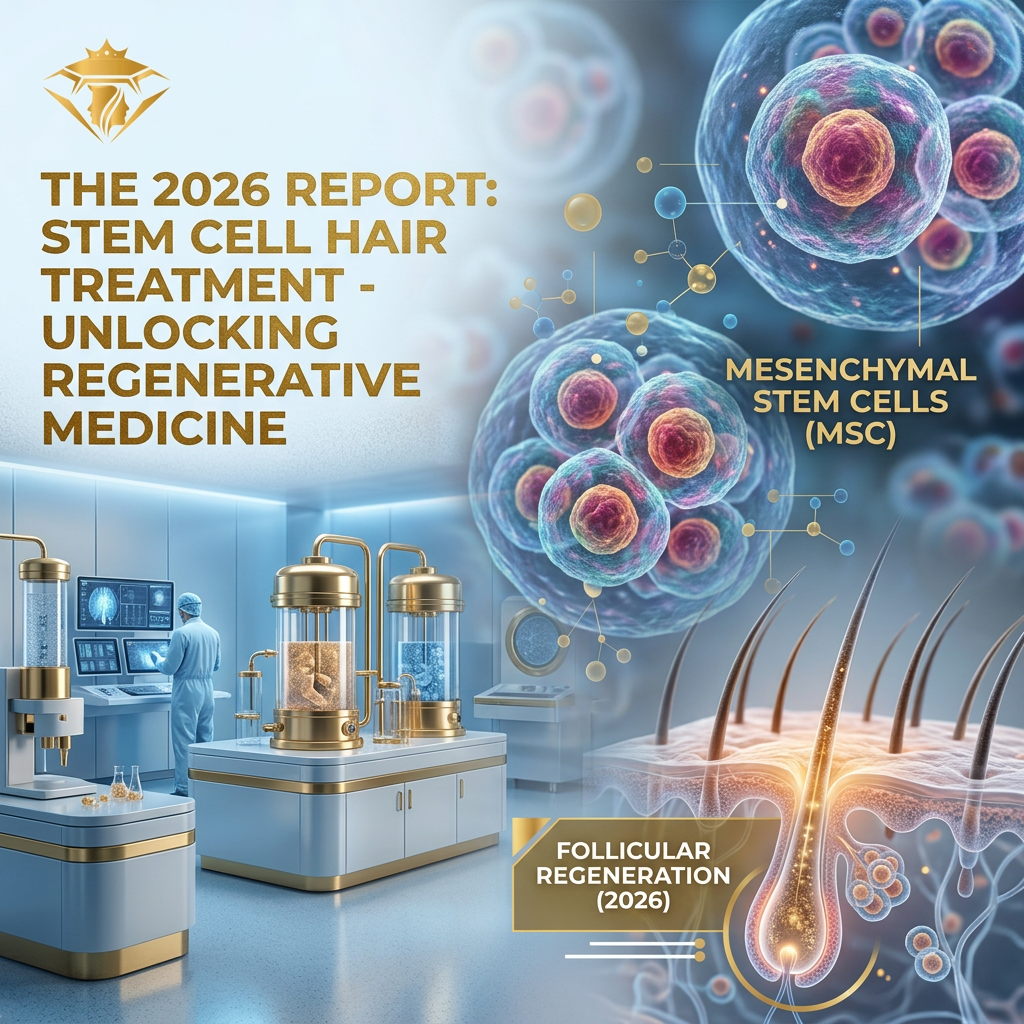
This uses the products stem cells release — exosomes carrying growth factors and signaling molecules — rather than the cells themselves. This is the most clinically available version in 2026, with encouraging early results for thinning hair.
2. Stem cell-enriched injections
Some treatments process a patient’s own tissue (often fat, which is stem cell-rich) to create an injectable concentrate applied to the scalp. Available in some clinics, with variable evidence and standardization.
3. True stem cell follicle regeneration / cloning
The holy grail — growing new follicles from stem cells to multiply hair indefinitely. This remains largely in research and trials in 2026. It is not a proven, off-the-shelf cure, no matter how a clinic markets it.
When someone says “stem cell hair treatment,” your first question should be: which of these do you actually mean?
The Surprising Truth About Where We Are
A few facts that reframe the whole conversation:
- The most effective “stem cell” treatments available now don’t use whole stem cells at all — they use the signaling products (exosomes) those cells release.
- Real follicle cloning is genuinely being researched and progress continues — but it has been “a few years away” for a while, and patients should treat 2026 cloning claims with skepticism.
- The biology is legitimately promising. This isn’t snake oil as a category. It’s a real frontier where the available products are earlier-stage than the marketing implies.
- Standardization is the weak link. “Stem cell” products vary enormously in source, processing, and quality between providers.
What Actually Works Right Now
For someone losing hair in 2026, the realistic, available regenerative options are:
- Exosome therapy — stem cell-derived signaling; encouraging early evidence for density and thickness
- PRP — your own platelets and growth factors; better-established support for follicles
- Mesotherapy — targeted scalp nourishment
- Medical therapy — established treatments for pattern hair loss
- Hair transplantation — the proven, definitive option for restoring hair to bald areas
Notice what’s not on the “proven and available” list: stem cell cloning that regrows unlimited hair. That’s the line between science and sales.
Stem Cell Approaches: Reality Check Table
| Approach | Status in 2026 | Realistic Expectation |
|---|---|---|
| Exosome therapy (signaling) | Available, emerging evidence | Supports thinning hair density |
| Stem cell-enriched injections | Available, variable evidence | Variable, depends on provider |
| Follicle cloning/regeneration | Largely experimental | Not a proven available cure |
| Hair transplant (established) | Proven, widely available | Definitive for bald areas |
How to Spot Hype vs Science
Red flags that a “stem cell” treatment is overselling:
- Promises to “cure baldness permanently” or regrow unlimited hair
- Claims of growing brand-new follicles from scratch, available today
- No transparency about what’s actually in the product or where it’s sourced
- Pricing that assumes you won’t ask hard questions
- “Revolutionary breakthrough” language with no specifics
Green flags of an honest provider:
- Clear explanation of which approach they use (usually exosomes or PRP)
- Realistic, evidence-based expectations
- Transparency about sourcing and regulation
- Willingness to say a transplant is the better option for bald areas
Who Might Benefit
Regenerative stem cell-derived treatments (realistically, exosomes and similar) suit:
- Patients with early to moderate thinning who want to strengthen existing hair
- Those supporting a hair transplant result
- People comfortable with an emerging, non-surgical option and realistic expectations
They don’t suit anyone expecting to regrow a fully bald scalp without surgery — that remains the domain of transplantation.
Common Misconceptions
“Stem cell treatment cures baldness.”
No available 2026 treatment cures baldness. The signaling-based options support thinning hair; they don’t regrow fully bald areas.
“Stem cell treatments use actual stem cells.”
The most available versions use the products stem cells release (exosomes), not the cells themselves.
“Follicle cloning is available now.”
It remains largely experimental. Treat claims of available cloning with strong skepticism.
“All stem cell products are equivalent.”
Source, processing, and quality vary enormously between providers.
“It replaces hair transplants.”
For bald areas, transplantation remains the proven option. Regenerative treatments support existing hair.
Frequently Asked Questions
Does stem cell hair treatment actually work?
Treatments based on stem cell signaling (like exosomes) show encouraging early results for thinning hair. True stem cell follicle regeneration remains largely experimental in 2026.
Is stem cell hair treatment a cure for baldness?
No. No available 2026 treatment cures baldness. The realistic options support existing thinning hair; bald areas are restored by transplantation.
Do stem cell treatments use real stem cells?
The most available versions use the products stem cells release — exosomes carrying growth factors — rather than whole stem cells.
What’s the difference between exosomes and stem cell treatment?
Exosomes are the signaling vesicles released by stem cells. Most “stem cell” hair treatments available now are actually exosome or growth-factor based.
Is hair cloning available in 2026?
Not as a proven, off-the-shelf treatment. Follicle cloning and regeneration remain largely in research and trials.
What stem cell-based treatments are actually available?
Mainly exosome therapy and, in some clinics, stem cell-enriched injections. PRP and mesotherapy are related regenerative options.
Can these treatments regrow a bald scalp?
No. They support existing follicles. Restoring hair to bald areas requires a transplant.
Are stem cell hair treatments safe?
The signaling-based options generally have favorable safety profiles, but quality and regulation vary. Provider transparency matters.
How do I avoid stem cell hair treatment scams?
Be skeptical of “permanent cure” claims, demand transparency on what’s used and how it’s sourced, and favor providers who set realistic expectations.
Who is a good candidate?
People with early to moderate thinning who want to support existing hair, or who are enhancing a transplant — with realistic expectations.
Is stem cell treatment better than a hair transplant?
For bald areas, no — a transplant is the proven option. Regenerative treatments support thinning hair and are often used alongside surgery.
How much do stem cell-based hair treatments cost?
Costs vary widely by approach and provider, with exosome therapy generally more expensive than PRP.
Key Takeaways
- “Stem cell hair treatment” covers very different approaches at different maturity levels
- The most available versions use stem cell signaling (exosomes), not whole cells
- Signaling-based treatments show real promise for thinning hair
- True follicle cloning remains largely experimental in 2026
- No available treatment cures baldness; transplants restore bald areas
- Be skeptical of “permanent cure” marketing and demand transparency
Expert Summary
Dr. Sherif Hegazy on stem cell hair treatment: “This is the field where I have to do the most myth-correcting. Patients walk in having read that stem cells will regrow their entire head of hair, and I have to gently separate the genuine science from the marketing. The real, available regenerative treatments — exosomes especially — are promising and I use them. But they support thinning hair; they don’t clone new follicles or cure baldness, and any clinic claiming otherwise in 2026 is selling research as if it were a product. The future here is genuinely bright. The present just needs honesty.”
At Diamond Aesthetics in Cairo, Dr. Hegazy offers evidence-based regenerative treatments with clear, honest framing about what current science supports — and recommends transplantation when it’s the realistic option for restoring hair.