

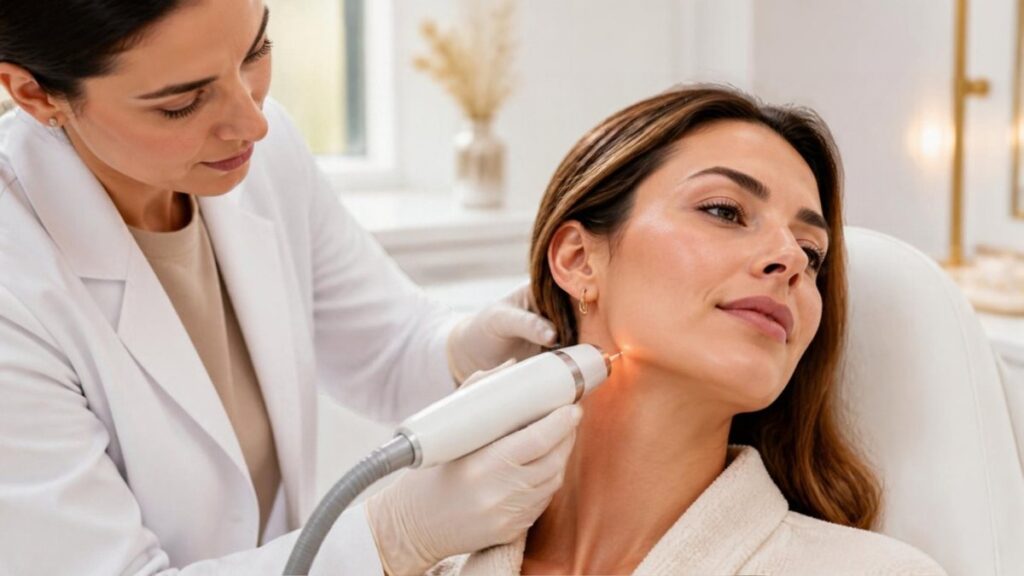
The patients who are happiest with Endolift six months after treatment have one thing in common: they understood the timeline before walking in. The disappointment cases — the ones who feel the treatment “didn’t work” — almost always come from patients who expected dramatic results in week one. Endolift doesn’t deliver dramatic results in week one. It delivers them in months three through six, after the collagen response has had time to play out.
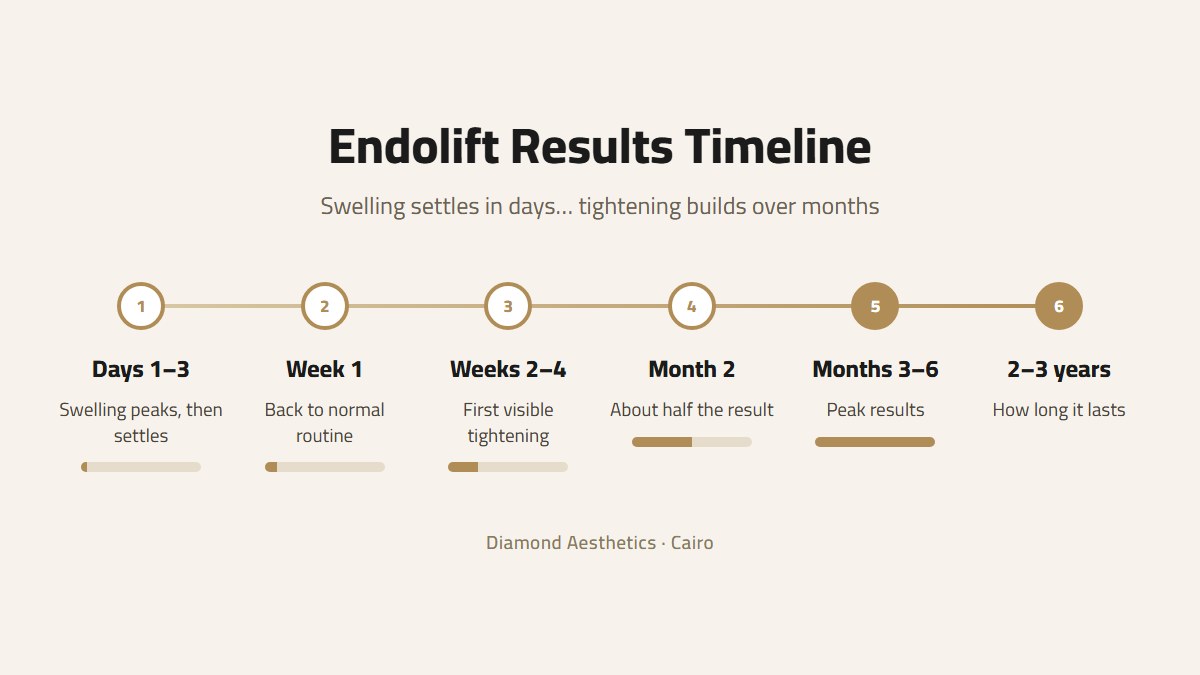
Every patient asks the same thing: when will my endolift results show? This guide follows endolift results day by day and month by month, so you know which endolift results are normal at each stage — and when to expect the final endolift results.
The endolift results timeline is gradual on purpose. The gradualness is also why the final result looks natural rather than overdone. Below is what to expect day by day in the first two weeks, how long swelling lasts, how to look after the area, and when the real results appear.
Endolift Results at a Glance
| Stage | What you can expect |
|---|---|
| Procedure | About 30–60 minutes per area under local anesthesia; most people go home the same day |
| Days 1–3 | Swelling peaks, then starts to settle; possible bruising at the entry points |
| Week 1 | Most swelling gone; back to normal activity within 1–3 days |
| Weeks 2–4 | First visible tightening (around 20–30% of the final result) |
| Month 2 | Collagen response builds — roughly half of the final result |
| Months 3–6 | Main change and peak results |
| How long results last | Typically 2–3 years, depending on age, skin and lifestyle |
How Endolift Actually Works
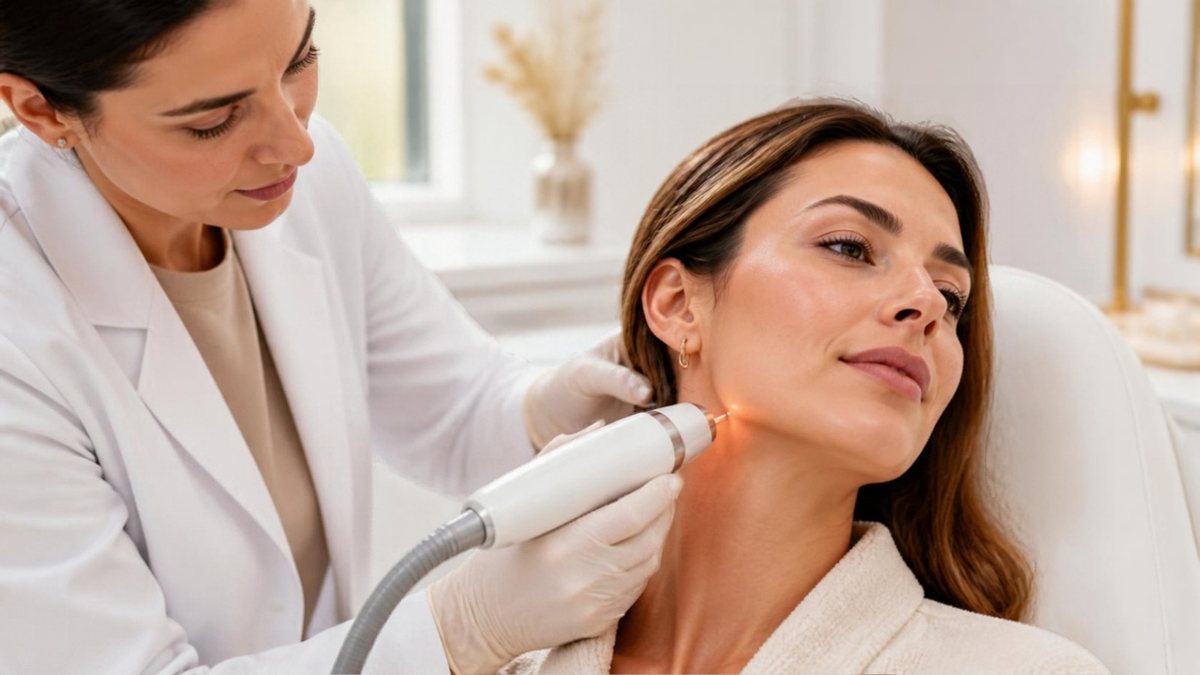
A 1470nm laser fiber is inserted through tiny entry points and works on three mechanisms:
- Melts small fat pockets under the skin
- Tightens existing collagen fibers immediately through thermal contraction
- Triggers the body to produce new collagen and elastin over the following months
The immediate tightening shows up within weeks. The new collagen production takes months. The combination is what makes the final result look like a healthier version of the patient’s own skin rather than a treatment effect. For a full overview of the technology, see our guide to Endolift laser treatment, and our skin and aesthetic dermatology services in Cairo.
How Long Does the Endolift Procedure Take?
For most facial areas — jawline, jowls, under-chin or neck — the treatment itself takes around 30 to 60 minutes per area, plus time for cleansing and local anesthesia. Body areas such as arms, knees or abdomen can take longer depending on their size. Endolift is usually a single session; your doctor decides whether a second session is worthwhile after reviewing your result at around six months.
Day 0: Right After Treatment
The first hours after Endolift:
- Slight redness at the entry points
- Mild to moderate swelling
- Possible bruising
- A subtle tightening sensation in the treated area
The treated area may look slightly fuller initially. That’s swelling, not the final result. Patients who check the mirror obsessively for the first 24 hours always come away convinced the treatment hasn’t worked. That’s because it hasn’t worked yet.
Endolift Results Day by Day: The First Two Weeks
| Day | What’s normal | What helps |
|---|---|---|
| Day 1 | Swelling and tightness; mild tenderness; small marks at entry points | Cold compresses in short intervals; sleep with your head slightly raised |
| Days 2–3 | Swelling at its peak; bruising may appear | Gentle cleansing; avoid heat, sauna and intense exercise |
| Days 4–7 | Swelling clearly settling; entry points healing | Return to normal routine; daily sunscreen |
| Days 8–14 | Most bruising fading; skin may feel firm or slightly numb in spots | Keep up sun protection and follow-up advice |
Days 1–7: The Quiet Phase
During the first week:
- Swelling peaks at 24–48 hours, then begins resolving
- Bruising appears and clears (usually by day 7–10)
- Entry points heal completely
- Mild tenderness lingers
- Most patients return to normal activity within 24–72 hours
No major improvement visible yet. The skin is still in inflammation mode and the collagen response hasn’t begun.
Endolift Swelling: How Long Does It Last?
Most Endolift swelling is visible for 1–3 days and is largely gone by the end of the first week. Areas with looser tissue — under the chin and the neck — can stay a little puffy for up to two weeks. A feeling of firmness or small areas of altered sensation can last a few weeks while the tissue heals; this is a normal part of the process.
Swelling after 2 weeks is usually mild and only noticeable to the patient. Swelling that increases instead of settling, one side that becomes clearly larger, warmth, worsening pain or fever is not typical — contact your clinic promptly if that happens.
Endolift Aftercare: The First 7 Days
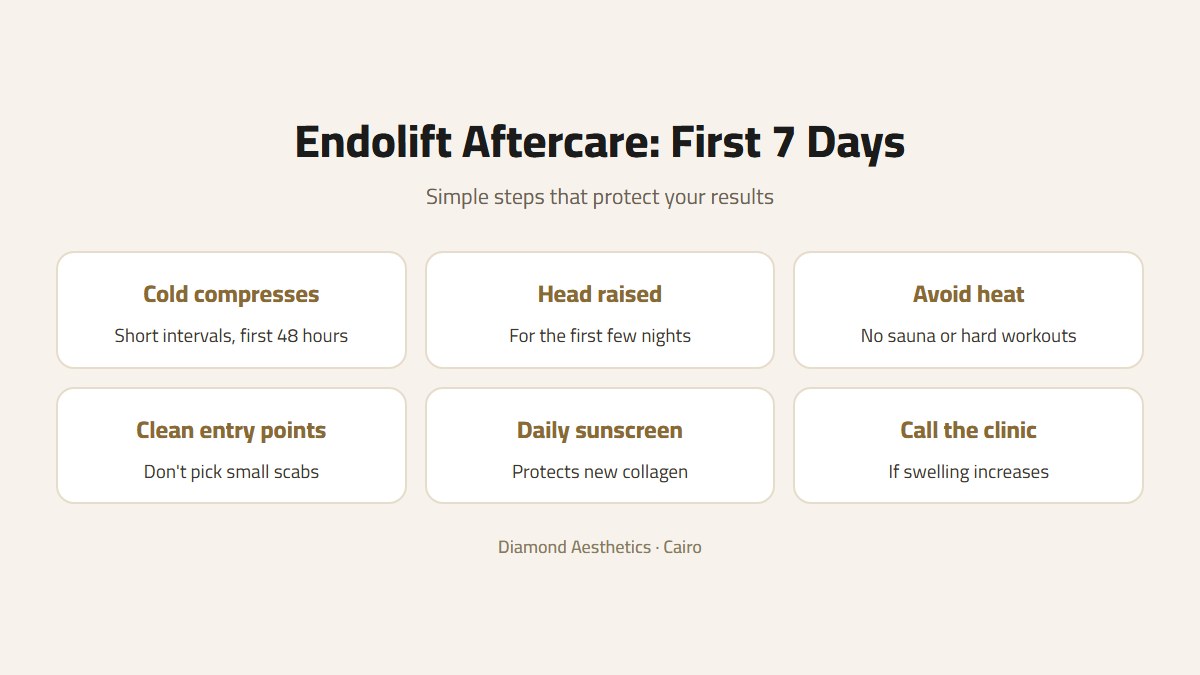
- Cold compresses in short intervals during the first 24–48 hours to reduce swelling.
- Sleep with your head slightly raised for the first few nights after facial treatment.
- Avoid heat — sauna, steam rooms and very hot showers — and intense exercise for several days.
- Keep entry points clean and don’t pick at the small scabs.
- Sunscreen every day, and wear any support garment or chin strap exactly as instructed.
- No massage or other treatments on the area until your doctor confirms it’s fine.
Your doctor’s written instructions always come first, because aftercare depends on the area treated and your own skin.
Weeks 2–4: First Real Tightening
By the start of week two, the picture starts changing:
- Swelling has resolved
- Initial tightening becomes visible
- Skin texture starts looking smoother
- Jawline and chin definition begin to sharpen
- Bruising fully resolves
This is the first “the treatment is working” moment for most patients. It’s also only about 20–30% of the final result.
Month 2: The Collagen Response Begins
Around weeks 6–8, the body’s collagen production ramps up significantly. Visible changes:
- Tighter, firmer skin
- More defined contours, particularly the jawline and neck
- Lifting in the lower face
- Smoother texture
- Treated fat pockets becoming visibly reduced
Most patients are seeing roughly half their final result by month two. People around them start asking what changed.
Months 3–4: Major Improvement
The middle of the timeline is where the most dramatic visual change happens.
- Collagen and elastin remodeling at peak rate
- Tightening obvious in the mirror and in photos
- Friends and family comment without prompting
- Lower face looks lifted, the neck looks longer
- Body areas treated (knees, arms, bra fat) show measurable contour change
By this point patients are seeing about 70–80% of the final outcome.
Months 5–6: Peak Results
The endolift results timeline reaches its peak at months 5–6:
- Full collagen remodeling essentially complete
- Skin appears noticeably firmer
- Contour improvement at its strongest
- Texture smoother than at any earlier point
- The “lifted” effect fully visible
Most clinical studies measure outcomes at the 6-month mark for a reason. This is when the procedure has done what it’s going to do.
Months 6–12: Refinement
Some patients continue to see subtle improvement up to a year after treatment. The collagen turnover continues at a slower rate:
- Skin gradually keeps tightening
- Contour refines further
- Texture continues smoothing
The improvement after month 6 is incremental, but real.
How Long Endolift Results Last
Endolift results typically last 2–3 years depending on:
- Age and natural collagen turnover
- Genetics
- Skin care routine
- Sun protection habits
- Lifestyle (smoking, alcohol, diet)
- Weight stability
Natural aging continues underneath the gain — but the gain itself holds well, and the procedure can be repeated when the result starts fading.
Endolift Results Timeline: What Actually Maximizes the Outcome
The patients with the strongest results follow predictable habits:
- Daily sun protection. UV destroys collagen faster than anything else. Every day matters.
- Hydration. Skin rebuilds best when well-hydrated systemically, not just topically.
- Collagen-supporting nutrients. Vitamin C, protein, and zinc in adequate amounts.
- Targeted skincare. Retinoids, peptides, and growth factors used consistently.
- No smoking. Drastically reduces collagen synthesis. Easily the biggest negative variable.
- Adequate sleep. Most repair happens overnight.
- Maintenance treatments. HIFU or RF every 12–18 months to extend the lift — see how Endolift compares with HIFU and whether Exilis RF skin tightening suits you.
These aren’t optional accelerators. They’re the difference between a strong 2-year result and a fading 1-year result.
When Endolift Doesn’t Deliver
Endolift is effective for mild to moderate laxity. It’s not effective for:
- Severe sagging
- Significant excess skin (which needs to be removed surgically)
- Large amounts of fat
- Advanced aging signs requiring multi-modal treatment
A good provider tells patients upfront when they’re not strong candidates. Treating severe laxity with Endolift wastes the patient’s money and produces predictable disappointment six months later. If you’re unsure, our guide to skin tightening without surgery explains which option fits which degree of laxity.
When Other People Notice
The “what did you do?” comments tend to land between months 2 and 4. By month 6, the visual difference is obvious in side-by-side photos. The patients who take their own before-photos before treatment consistently end up more satisfied than the ones who don’t — the side-by-side comparison shows changes that day-to-day mirror checks easily miss.
Endolift Side Effects
Endolift is well-tolerated:
- Mild bruising for up to 10 days
- Swelling for 1–3 days
- Tenderness for 5–7 days
- Tiny scabs at entry points that resolve within a week
- Temporary firmness or patches of reduced sensation that settle over a few weeks
Serious complications are rare in skilled hands. Provider experience is the variable that matters most. Published clinical work on 1470nm laser-assisted skin tightening — including a case series on facial rejuvenation with EndoliftX — reports improvement building over the following months, which matches the timeline above.
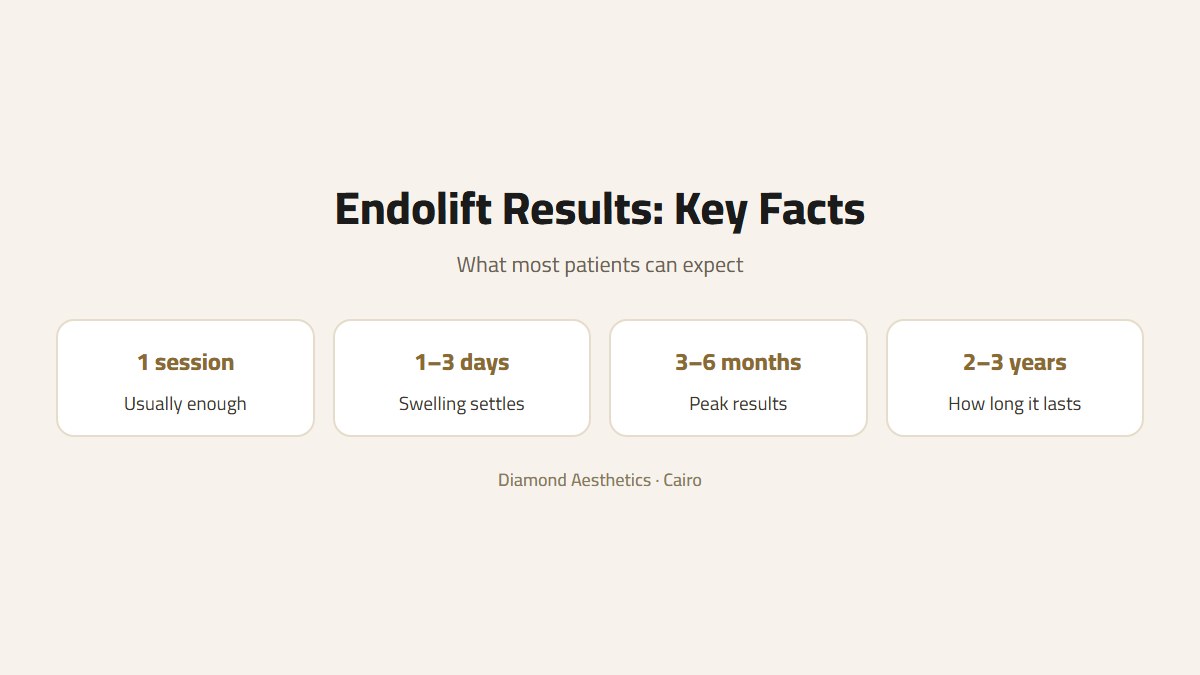
Endolift results in short: endolift results start to show at weeks 2–4 as swelling settles, roughly half of the final endolift results are visible by month 2, and the full endolift results peak between months 3 and 6. Good aftercare and daily sun protection help those results last for years.
FAQ
Endolift Results: Frequently Asked Questions
When will I see Endolift results?
First tightening usually shows between weeks 2 and 4. Around half of the final result is visible by month 2, and results peak between months 3 and 6 as new collagen forms.
How long does swelling last after Endolift?
Most swelling lasts 1–3 days and is largely gone within a week. Under the chin and on the neck, mild puffiness can last up to two weeks.
Is Endolift painful?
The procedure is done under local anesthesia, so most patients feel pressure and warmth rather than pain. Mild tenderness for a few days afterwards is normal.
How many Endolift sessions do I need?
One session is usually enough. Your doctor reviews the result at around six months and only suggests another session if it would add a meaningful improvement.
How long do Endolift results last?
Typically 2–3 years. Sun protection, not smoking, a stable weight and maintenance treatments help results last longer.
The Honest Summary
The endolift results timeline is gradual, and that’s the point. The patient walks out of the clinic looking essentially the same. Six months later, they look like a tighter, more refreshed version of themselves — and the result reads as natural because it was built on the patient’s own collagen response, not on an instant device effect.
At Diamond Aesthetics in Egypt, every Endolift treatment includes structured aftercare — scheduled follow-ups, skincare guidance, and personalized recommendations that maximize the final outcome and protect the investment. To find out whether Endolift is right for your skin, book a consultation with our aesthetic dermatology team.